Engaging college-age consumers on snacks.com
Bridging the gap between discovery and purchase of PepsiCo snacks for college-age consumers

83% Customer Satisfaction (CSAT) score recorded in user testing.

Applauded by PepsiCo sponsors on strategy and exploration.
Team
6 designers, 2 PepsiCo designers (mentors)
My role
UX Designer. I was responsible for mapping information architecture and prioritizing impactful web pages, consumer journey mapping, initial concept sketching, making interactive prototypes using Figma, user testing, and iteration.
Goal
The goal was to engage college age consumers on snacks.com, resulting in increased conversion.

Possible Impact
Increase conversion for 18M+
by appealing to students enrolled in college in the United States.
Improve brand preference
among GenZ consumers by targeting specific user needs and desires.
Discovery
We prioritized designing features for high-impact web pages.
By mapping core user-journeys, we prioritized the web pages that were core to the consumer's journey to successful purchase. We then analyzed the usability issues and engagement bottlenecks to determine opportunities for feature development.
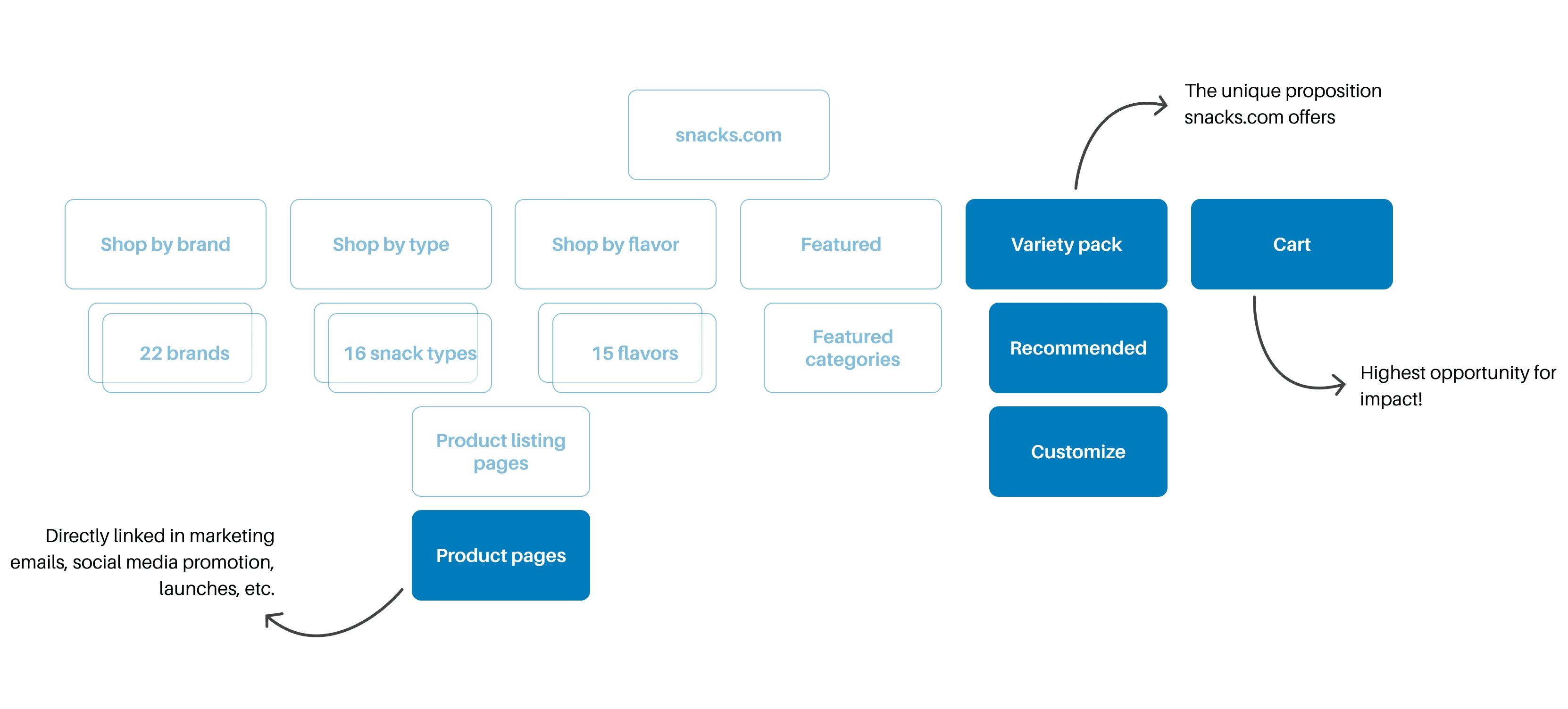
We identified some pitfalls like limited delivery, and explored opportunities for improvement.
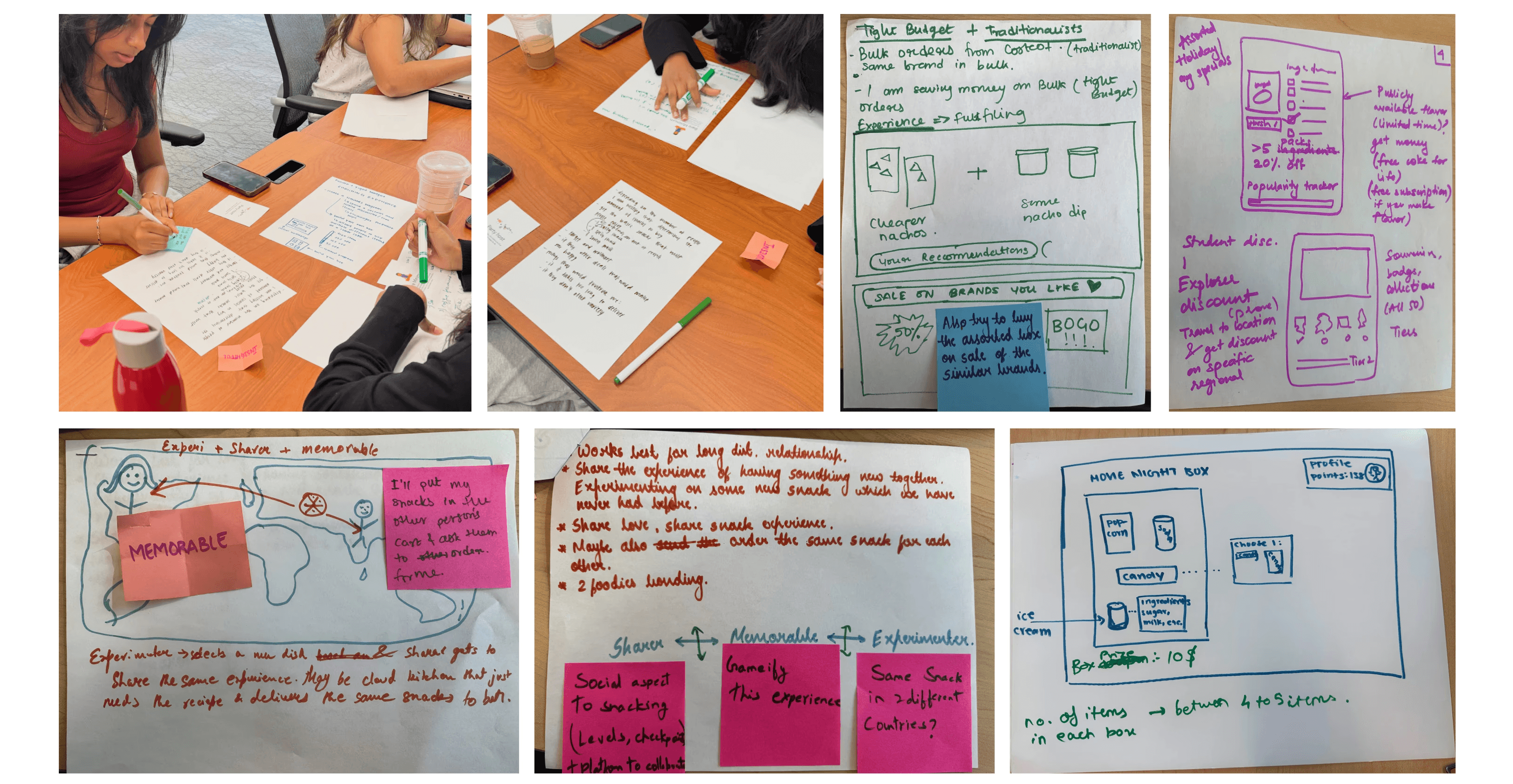
By conducting a codesign workshop with college age populations we could determine user values and needs.
Lack of delivery fulfillment options
No reviews or rating, missing social proof
Variety Packs are valuable, but not well presented
Snack-shopping as a social activity is unexplored
Design and Iteration
We added features to the website keeping impulse-purchase patterns, economical snack preference, and social snacking in mind.
We decided to make this design mobile-first since that is the primary modality for our target users.
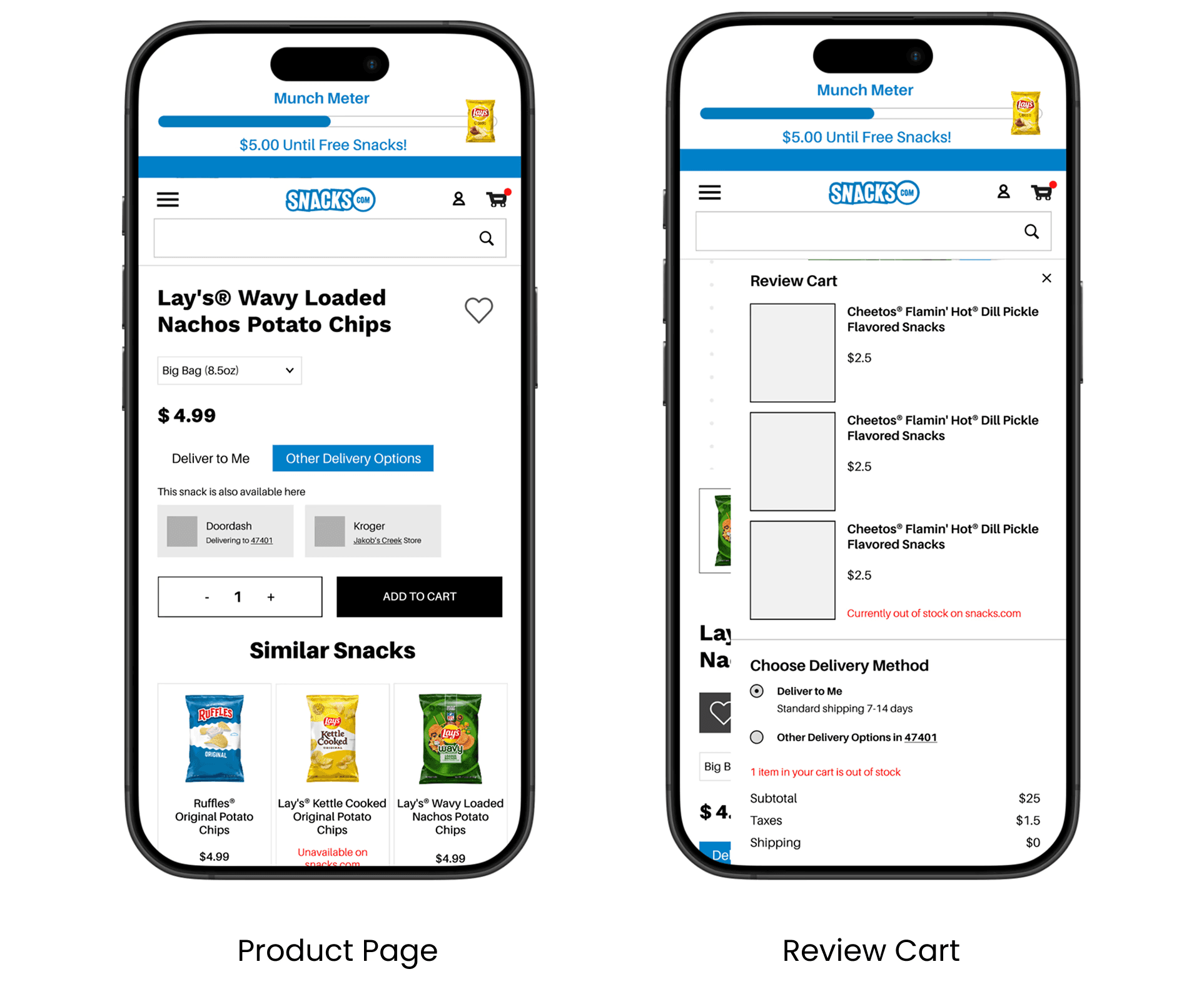
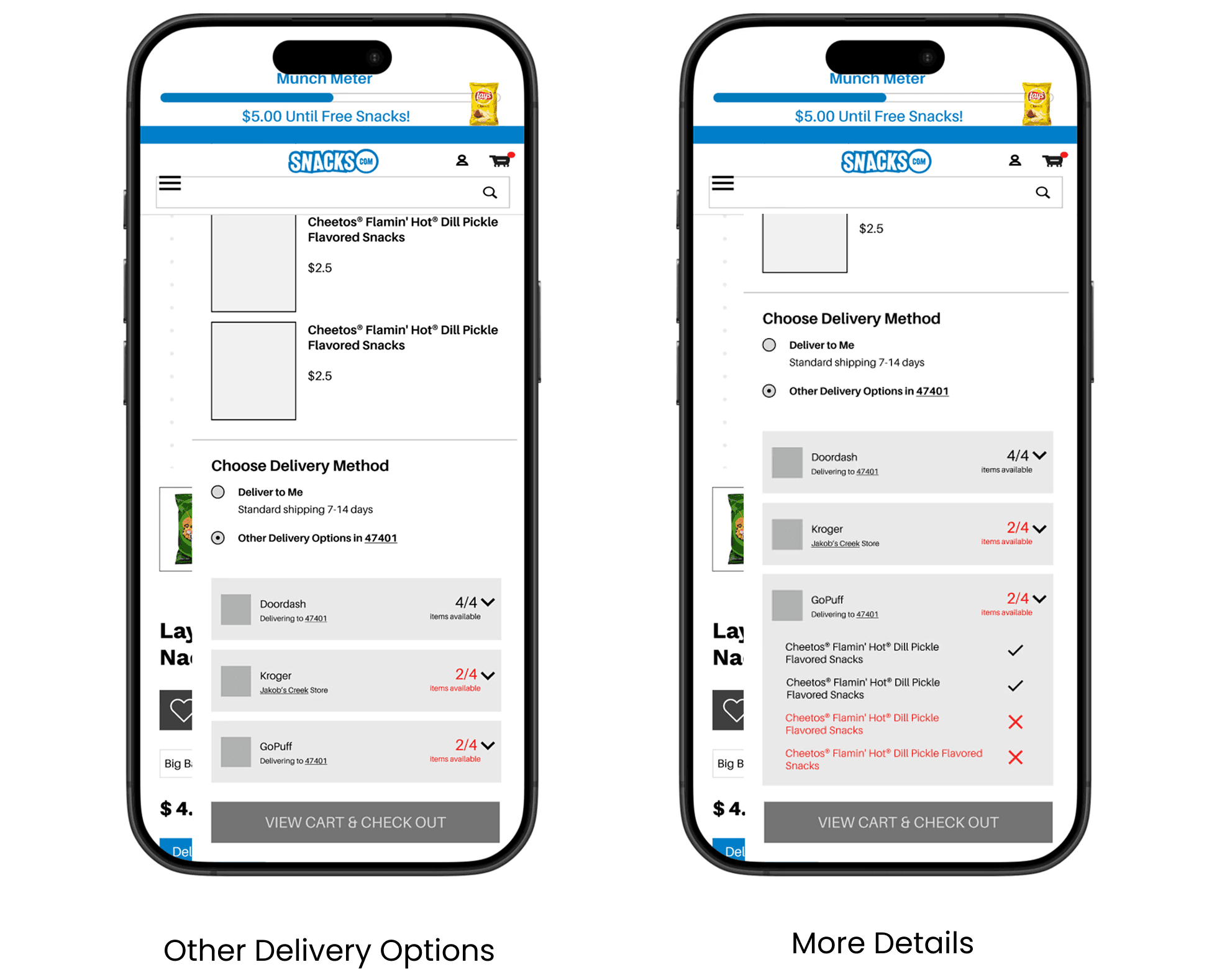
Consumers can now choose alternative, immediate delivery fulfillment options.
Originally, snacks.com offered 5-6 day delivery, but snack craving are immediate. A "Get it now" option links directly to other possible shopping options like Instacart or nearby grocery stores. In the checkout flow, availability in these locations is also reflected.
This prioritizes brand sales over channel exclusivity. It captures the user's intent at the peak of their craving, ensuring PepsiCo gets the sale even if Snacks.com doesn't handle the logistics.
1
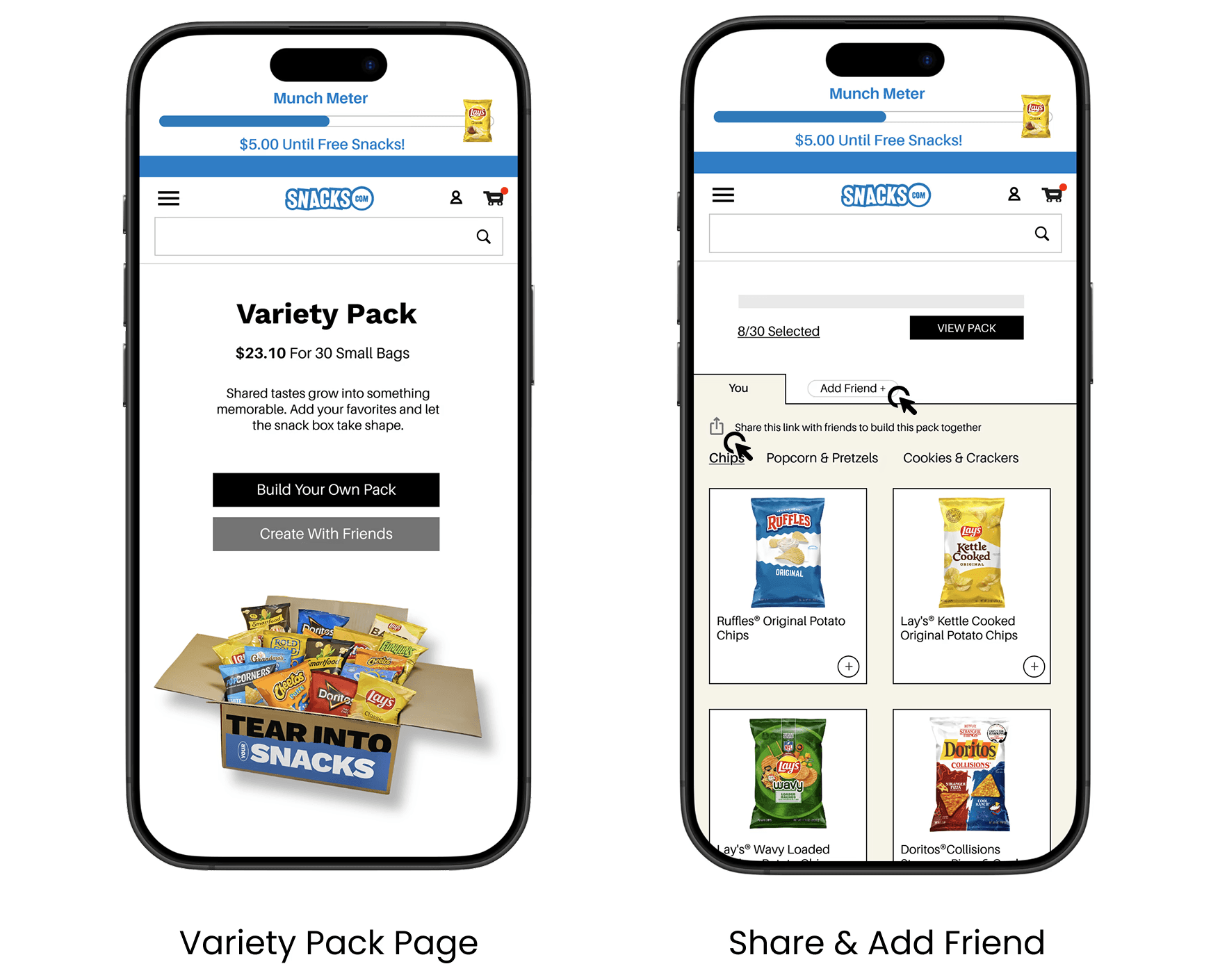
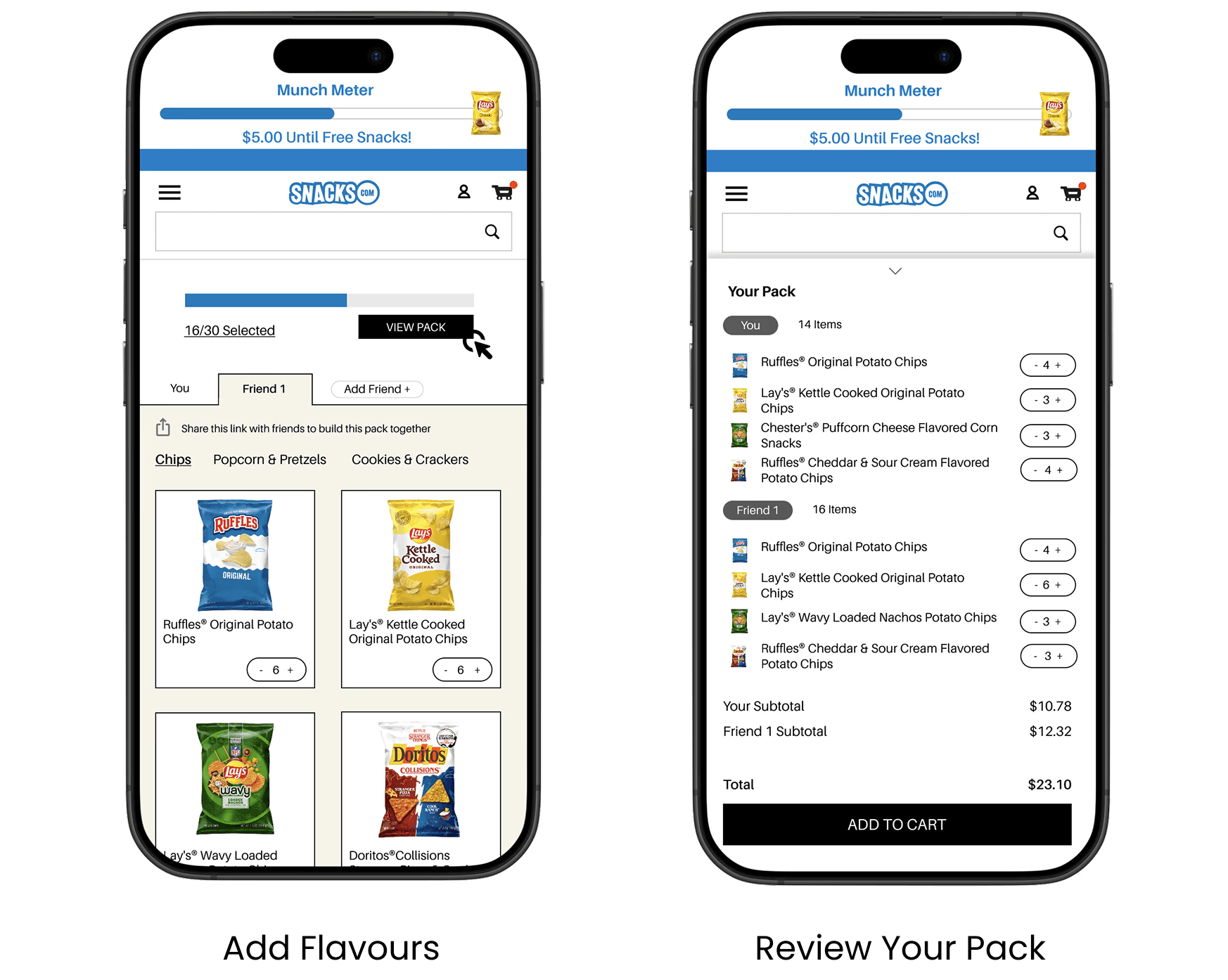
Consumers can collaborate to choose snacks in the economical variety pack.
The Variety Pack is a 30 snack bag collection priced at bulk rates, but college students usually require lesser number than that. We introduced collaborating on a single variety pack to optimize snack-buying in friend circles via a shared link. The summary screen breaks down individual selections and costs per person. This also provides the opportunity to snack for parties and hosted events, directly increasing Average Order Value (AOV) by leveraging group dynamics.
2
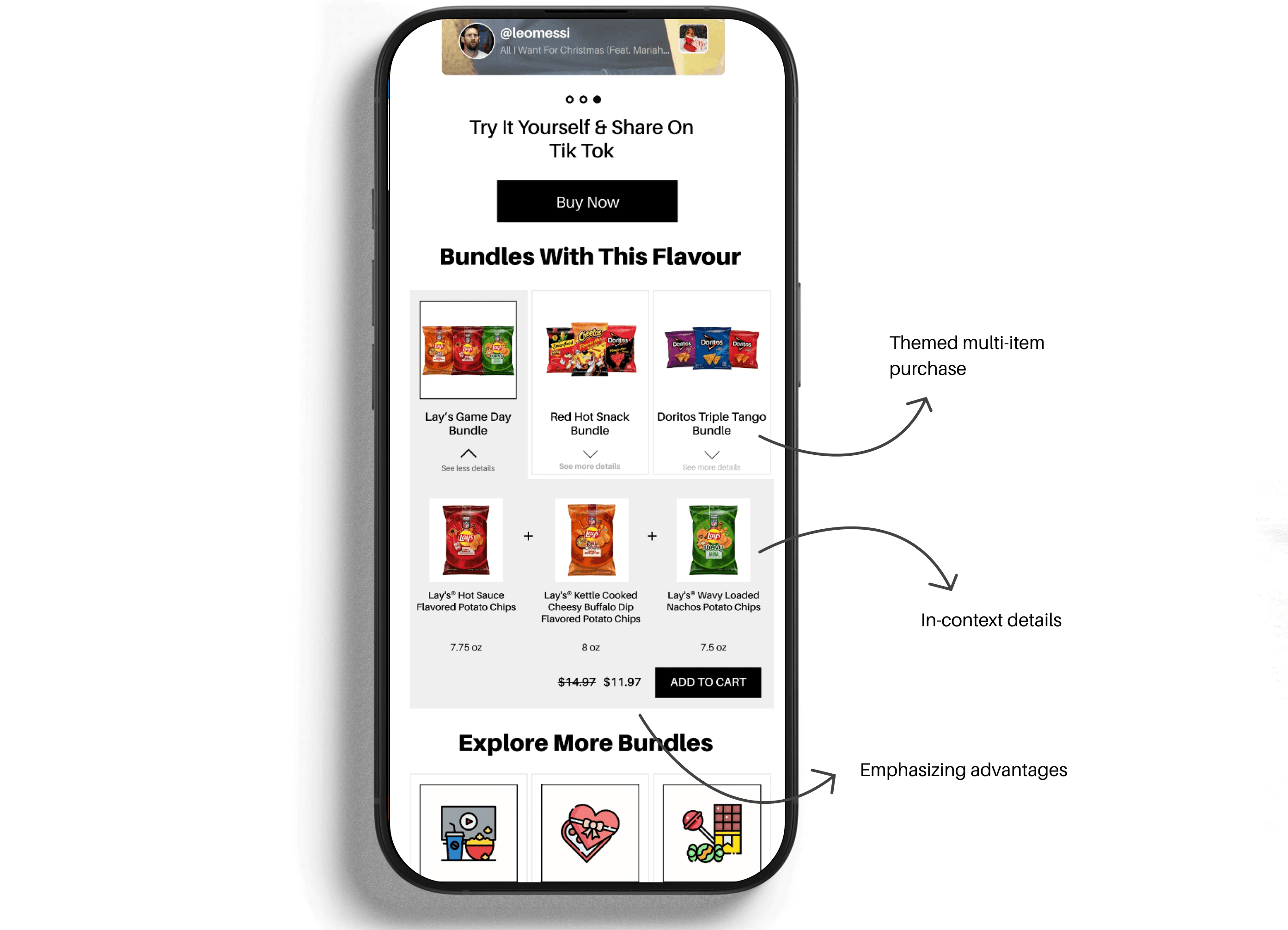
Introducing themed bundles for special occasions.
Users shopping for specific occasions (like "Game Day Party" or "Finals Week") feel overwhelmed browsing 20+ individual brands to build a cohesive set. We created a dedicated page featuring rotating, seasonal 3-pack bundles, such as a "Study and Focus" pack for December. An in-context preview on standard product pages allows users to view bundle details and calculated savings without navigating away from the item they are currently viewing.
This shifts the user experience from commodity shopping to solution shopping.
3
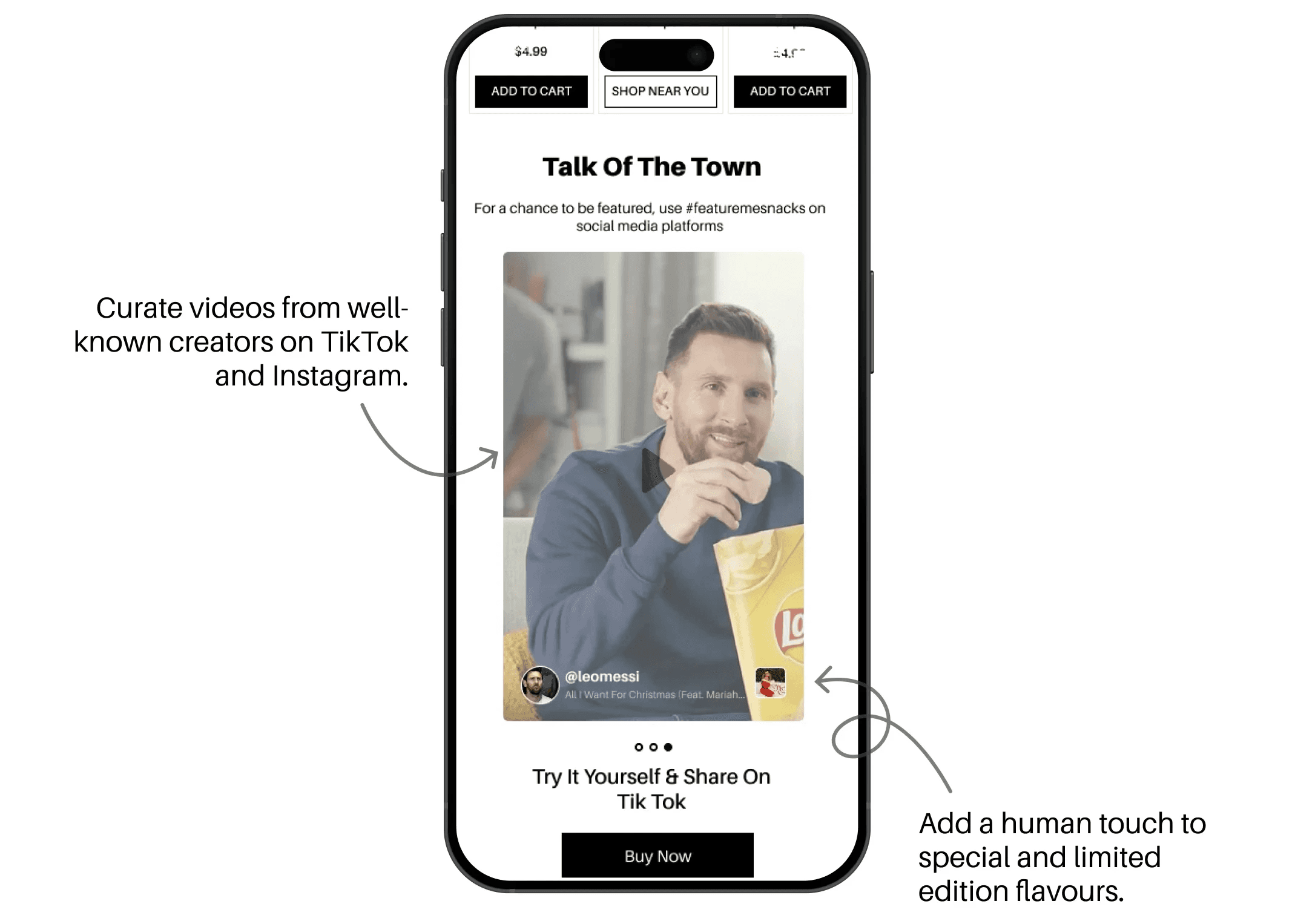
Integrating social media content as social proof
The lack of reviews and ratings on products on the website means no direct social proof. The best source of content for all nuanced data about products in social media. People discover snacks through trending recipes on TikTok, but the journey from social discovery to purchase is unrepresented on snacks.com.
An integrated social feed allows users to get social proof directly from UGC-style content.
4
Impact
We could achieve an 83% consumer satisfaction score on the designed features, meaning higher engagement.
Testing these features with college students revealed an 83% satisfaction score. Most participants also noted that they would return to use these features when shopping for snacks.
Reflection